
Heising-Simons Foundation Announces Inaugural Class of Astronova Fellows
The new fellowship supports outstanding scientists developing instrumentation that drive astronomical research
(LOS ALTOS, California, June 30, 2026)—The Heising-Simons Foundation’s Science program is pleased to announce Christina Vides, Ph.D., and Aafaque Khan as the inaugural class of Astronova Fellows.
The fellows will pursue distinct research projects that advance our understanding of the universe through astronomical instrumentation: Dr. Vides’s work will seek to uncover a previously understudied population of protoplanets orbiting distant stars.
The Astronova™ Fellowship supports outstanding postdoctoral scientists who are developing innovative astronomical instrumentation that will transform astronomy, astrophysics, cosmology, and planetary science. This fellowship aims to help fellows secure tenure-track faculty positions, enabling them to continue their groundbreaking research and mentor the next generation of astronomical instrumentalists.
“While novel instrumentation—from Galileo’s telescope to the JWST—has driven some of our greatest discoveries about the universe, today’s academic system often undervalues astronomical instrumentalists,” said Gabriele Betancourt-Martinez, program officer for Science at the Heising-Simons Foundation and Astronova Fellowship lead. “Universities are often hesitant to hire instrumentalists due to high startup costs, and slower publication outputs can put them at a disadvantage come tenure review. This leads to fewer instrumentalists in faculty positions and fewer students trained to become the next generation of astronomical innovators. The Astronova Fellowship aims to break this cycle.”
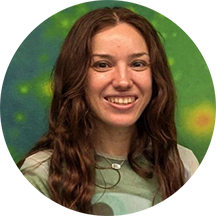
Christina Vides, Ph.D.
Host Institution: University of California, Santa Cruz
As an Astronova Fellow, Dr. Vides will significantly advance her research in aperture masking interferometry. First, she will develop data-reduction pipelines that convert raw observations from the Keck Observatory’s new SCALES instrument into scientifically reliable data. This software will automate complex calculations to interpret aperture-masked light waves and refine the data so that it can be reconstructed into images of planets forming in orbits similar to those of Saturn and Jupiter around distant stars. She is also designing a Jewel mask, a multifaceted interferometric device that amplifies the light received by a telescope, boosting its sensitivity to detect even farther, fainter planetary systems in the process of formation. Learn more about Dr. Vides in her bio.
The Astronova Fellowship
Launched in 2026, the Astronova™ Fellowship supports promising postdoctoral scientists who are working to revolutionize the fields of astronomy and astrophysics, cosmology, and planetary science by developing cutting-edge astronomical instrumentation. Through this fellowship, we seek to advance fellows into tenure-track faculty positions, where they can continue their pioneering instrumentation research and mentor and train the next generation of astronomical instrumentalists.
The Astronova™ Fellowship is a companion to the Heising-Simons Foundation’s 51 Pegasi b Fellowship, which provides postdoctoral scientists with the opportunity to conduct research in planetary astronomy. Since 2017, more than 68 fellows have made unique contributions to our understanding of planetary system formation and evolution, many enabled by new astronomical instrumentation.
Key features of the Astronova Fellowship include:
- Flexible research award. Each fellow, through their host institution, receives funding for salary, benefits, and discretionary spending over a four-year term, with potential for a fifth-year extension.
- Access to Innovation Fund. Beginning in year two of the followship period, fellows may apply for an additional Innovation Fund grant to pursue a novel instrumentation concept or component of their own design.
- Catalytic support. Fellows who obtain a faculty or research position during their fellowship are eligible to apply for a new grant to augment their startup package.
- Peer learning and connections. Fellows have opportunities to participate in instrumentation-specific professional development and networking—including an annual research summit with their advisors and other leaders in the field.
The Heising-Simons Foundation’s Science Program is accepting applications from eligible universities and research institutions that wish to be considered as host institutions for future cycles of the Astronova™ Fellowship until July 10, 2026.
The next cycle of the Astronova™ Fellowship will open for applications from prospective fellows in July 2026 and close in October 2026, with Astronova Fellows beginning work in 2027.