
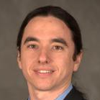
Speaker:
Marcos Rigol
Institution:
Georgetown University
Speaker Link:

Date:
Thursday, November 29, 2012
Time:
3:30 pm
Location:
RH 101
ABSTRACT:
Recently, experiments with ultracold gases have made it possible to study dynamics of (nearly) isolated many-body quantum systems. This has revived the theoretical interest on this subject. In generic isolated systems, one expects nonequilibrium dynamics to result in thermalization: a relaxation to states where the values of macroscopic quantities are stationary, universal with respect to widely differing initial conditions, and predictable through the time-tested recipe of statistical mechanics. However, it is not obvious what feature of a many-body system makes quantum thermalization possible, in a sense analogous to that in which dynamical chaos makes classical thermalization possible. Underscoring that new rules could apply in this case, some experimental studies have suggested that statistical mechanics can provide wrong predictions for the outcomes of relaxation dynamics. In this colloquium, we show that generic isolated quantum systems do in fact relax to states where observables are well-described by statistical mechanical.
Moreover, we show that time evolution itself plays a merely auxiliary role as thermalization happens at the level of individual eigenstates. We also discuss what happens at integrability points, where a different set of rules apply.
Moreover, we show that time evolution itself plays a merely auxiliary role as thermalization happens at the level of individual eigenstates. We also discuss what happens at integrability points, where a different set of rules apply.
Host:
Sasha Chernyshev